
The Future of Internet Connectivity: Trends to Watch
Table of Contents
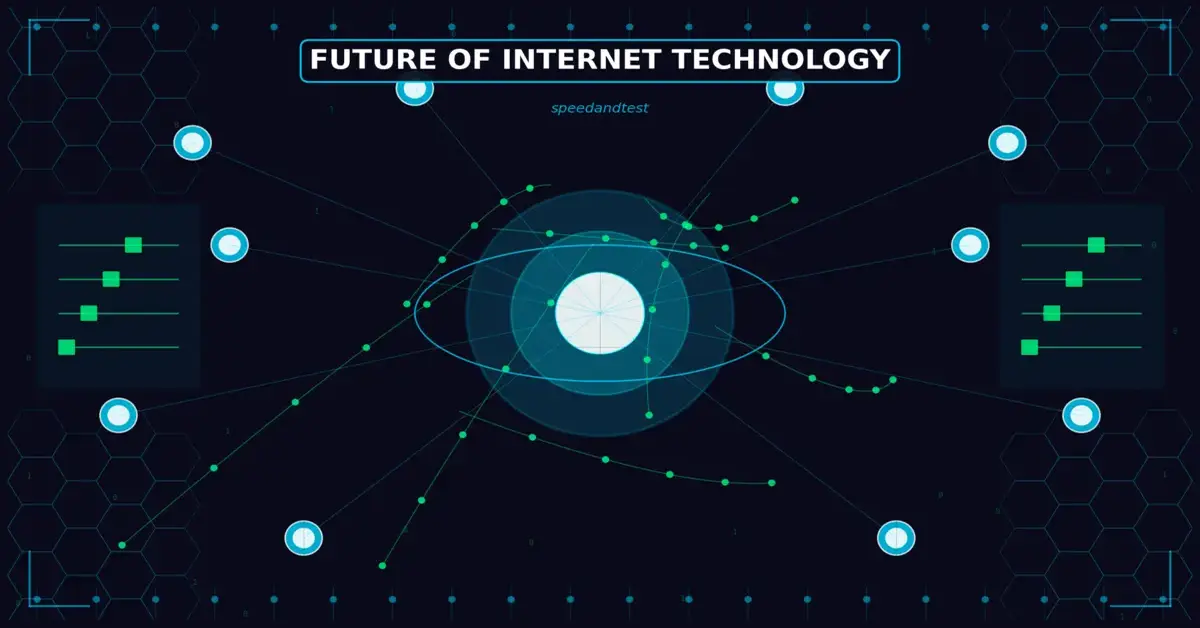
The internet has transformed dramatically over the past few decades, from a niche academic tool into the foundational infrastructure of modern life, and the pace of change shows no sign of slowing. Understanding where Internet Technology’s Future is headed helps individuals and businesses alike anticipate the capabilities, challenges, and opportunities that will shape the next era of connectivity. This article explores the key trends currently reshaping Internet Technology’s Future, from next-generation wireless networks to emerging applications that will define how we connect in the years ahead.
A Brief Look Back to Understand What’s Ahead
Predicting the Internet’s Technology Future benefits from understanding its past trajectory. Each major shift, from dial-up to broadband, from desktop to mobile-first browsing, and from static webpages to today’s interactive, video-heavy internet, followed a similar pattern: initial skepticism about practical demand, followed by rapid adoption once infrastructure and applications matured together. This historical pattern suggests that today’s emerging technologies, from edge computing to satellite constellations, are likely following a similar trajectory toward eventual mainstream adoption, even if their current state feels experimental or niche to many everyday users.
The Continued Expansion of High-Speed Connectivity
Fiber-optic infrastructure continues to expand into previously underserved areas, gradually closing the gap between urban centers with abundant connectivity options and rural regions that have historically lagged. This expansion, driven by both private investment and government broadband initiatives, is fundamentally reshaping what “typical” Internet speed means for households worldwide, with gigabit connections increasingly becoming a realistic option rather than a premium rarity reserved for a small segment of tech-savvy urban consumers.
Alongside wired expansion, 5G and emerging fixed wireless technologies are providing an increasingly viable alternative in areas where running physical cable remains impractical, meaningfully accelerating the timeline for bringing high-speed connectivity to previously underserved communities compared to waiting for wired infrastructure buildout alone.
The Road Toward 6G
While 5G networks are still being built out and optimized in many regions, research into sixth-generation wireless technology is already underway in laboratories and international standards bodies. Early research suggests 6G will push even further into extremely high-frequency spectrum, potentially enabling even greater bandwidth and lower latency, while also integrating more deeply with satellite networks and artificial intelligence-driven network management to optimize performance dynamically based on real-time conditions.
The Rise of Edge Computing
As applications increasingly demand near-instantaneous responsiveness, processing data closer to where it is generated, rather than routing everything to distant centralized data centers, has become an increasingly important architectural pattern. Edge computing distributes processing power across a network of smaller, geographically dispersed computing nodes, reducing latency for applications like autonomous vehicles, industrial automation, and augmented reality that simply cannot tolerate the delay inherent in round-tripping data to a distant cloud data center and back.
Artificial Intelligence and Network Management
Artificial intelligence is increasingly being woven into the infrastructure that manages Internet technology’s future traffic itself, not just the applications running on top of it. AI-driven network management systems can predict congestion before it occurs, dynamically route traffic to avoid bottlenecks, and identify potential security threats far faster than traditional rule-based systems. This shift toward intelligent, adaptive network infrastructure promises more resilient and efficient networks capable of automatically adjusting to changing conditions in ways that static, manually configured systems never could.

The Expanding Internet Technology’s Future of Things
The number of connected devices continues to grow at a remarkable pace, extending far beyond smartphones and computers into everyday objects: appliances, vehicles, industrial equipment, and city infrastructure. This expansion places new demands on network architecture, requiring the kind of massive device density support that technologies like 5G were specifically designed to enable. As this trend continues, the Internet Technology’s Future increasingly becomes an invisible layer woven into physical objects and environments rather than something we consciously “go online” to access through a dedicated device.
Satellite Internet Technology’s Future and Global Connectivity
Low-earth-orbit satellite constellations have emerged as a genuinely viable option for bringing Internet Technology’s Future connectivity to remote and underserved areas that traditional infrastructure struggles to reach economically. Unlike older geostationary satellite internet, which suffered from significant latency due to the enormous distances involved, low-earth-orbit constellations orbit much closer to the planet, delivering meaningfully lower latency and making satellite internet viable for a much broader range of applications, including some real-time use cases that were previously impractical over satellite connections.
Privacy, Security, and the Evolving Internet Technology’s Future
As the Internet Technology’s Future becomes more deeply integrated into daily life, privacy and security considerations continue to grow in importance and complexity. Emerging technologies like quantum computing present both promise and challenge: promise for dramatically more powerful computation, and a challenge for current encryption methods that quantum computers could theoretically break. This has spurred active research into quantum-resistant encryption standards, aiming to secure internet communications against future threats before quantum computing becomes powerful enough to pose a practical risk to current security infrastructure.
The Convergence of Physical and Digital Experiences
Augmented reality, virtual reality, and increasingly sophisticated mixed reality technologies point toward a future where the line between physical and digital experiences continues to blur. These applications place extraordinary demands on network infrastructure, requiring both substantial bandwidth and extremely low, consistent latency to feel natural and avoid the discomfort that can result from any perceptible lag between physical movement and the corresponding digital response.
The Growing Importance of Network Resilience
As critical services from healthcare to financial systems increasingly depend on Internet Technology’s Future connectivity, network resilience- the ability of infrastructure to withstand and quickly recover from disruptions- has become a growing focus for infrastructure planners. This includes not just redundant physical infrastructure capable of routing around damaged connections, but also improved coordination between infrastructure operators during major outages, and growing investment in infrastructure hardening against both natural disasters and increasingly sophisticated cyberattacks targeting critical network infrastructure directly rather than individual end users.
Climate-related disruptions, including extreme weather events, have added urgency to resilience planning in many regions, prompting infrastructure investment specifically designed to withstand conditions that older infrastructure was never originally engineered to handle. This trend toward resilience-focused infrastructure investment represents a meaningful shift from earlier decades, when raw speed and coverage expansion dominated infrastructure planning priorities almost exclusively.
How These Trends Connect
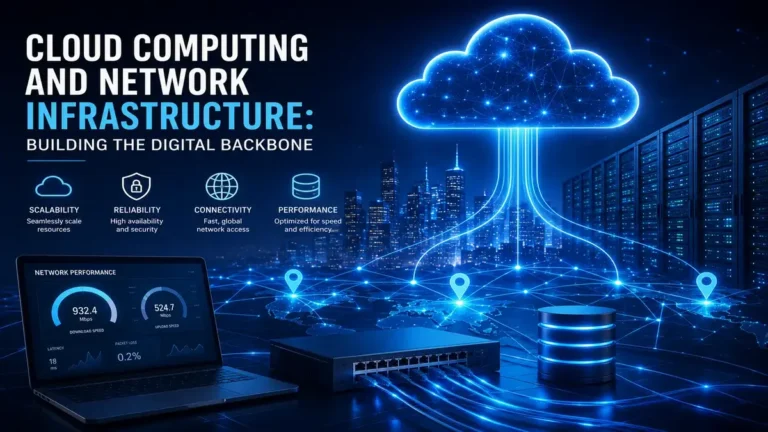
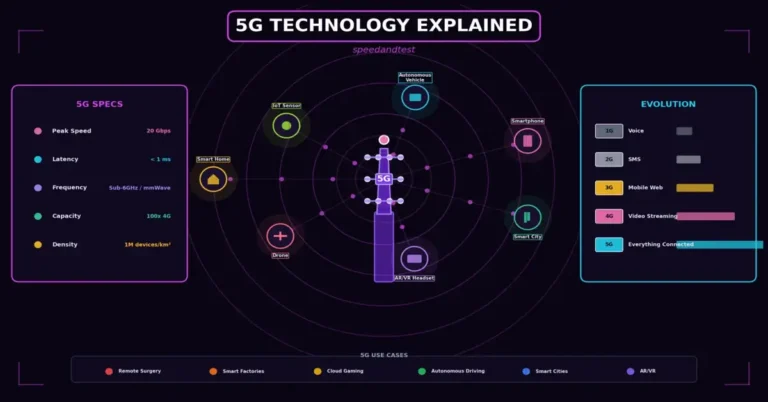
The trends shaping the future of Internet technology are deeply interconnected rather than isolated developments. Faster networks enable more sophisticated cloud and edge computing applications, which in turn generate demand for even faster and more reliable connectivity. For a deeper look at how cloud infrastructure and networking intersect, see our article on cloud computing and network infrastructure, and for more on next-generation wireless technology specifically, see our guide on 5G technology explained.
The Evolving Role of Internet Technology’s Future Infrastructure Providers
As Internet Technology’s Future advances, the companies building and operating the underlying infrastructure face growing pressure to invest continuously in upgrades rather than treating any given network buildout as a finished project. This shift has encouraged closer collaboration between internet service providers, equipment manufacturers, and content delivery networks, all working to ensure that infrastructure investments keep pace with rapidly evolving application demands. The traditional model of building a network once and operating it largely unchanged for a decade or more is increasingly giving way to a more continuous, iterative approach to infrastructure development, reflecting how quickly usage patterns and technical requirements can shift.
This changing dynamic also affects how regulators and policymakers approach Internet technology’s future infrastructure, with growing recognition that broadband access has become as fundamental a utility as electricity or water in enabling full participation in modern economic and social life. Government programs supporting infrastructure expansion into underserved areas reflect this evolving understanding, treating connectivity gaps as a genuine public policy concern rather than purely a private market outcome to be left entirely to commercial incentives.
Sustainability and Energy Efficiency in Network Infrastructure
As network infrastructure scales to support ever-growing data demands, energy efficiency has become an increasingly important consideration for infrastructure operators. Data centers and network equipment consume substantial amounts of electricity, and the industry has responded with significant investment in more energy-efficient hardware, renewable energy sourcing for data center operations, and smarter cooling systems that reduce the substantial energy overhead traditionally associated with keeping dense server infrastructure operating within safe temperature ranges.
This focus on sustainability is not purely altruistic; energy costs represent a significant operating expense for infrastructure providers, meaning efficiency improvements often align commercial incentives with environmental goals in ways that accelerate adoption of genuinely more sustainable practices across the industry, rather than requiring these improvements to rely solely on regulatory mandates or voluntary corporate commitments alone.
Preparing for an Increasingly Connected Future
For individuals and businesses alike, staying reasonably informed about these broader technology trends, without needing to become an expert in any single one, helps inform practical decisions about internet plans, equipment purchases, and technology adoption timing. Understanding that today’s cutting-edge technology will likely be tomorrow’s baseline expectation encourages a forward-looking approach to technology decisions, weighing not just current needs but how quickly those needs are likely to evolve given the consistent historical pace of Internet Technology’s Future by advancement over recent decades.
Frequently Asked Questions
When will 6G networks be available?
Commercial 6G deployment is generally expected sometime in the early to mid-2030s, following the typical decade-long research, standardization, and rollout timeline seen with previous wireless generations.
Are extreme weather events changing how infrastructure is built?
Yes. Growing exposure to extreme weather has prompted infrastructure investment specifically designed to withstand conditions that older infrastructure was not originally engineered to handle.
Will edge computing replace traditional cloud computing entirely?
No. Edge computing complements rather than replaces centralized cloud infrastructure, handling latency-sensitive processing locally while the cloud continues to manage larger-scale storage and computation that does not require immediate responsiveness.
What is driving continuous rather than periodic infrastructure investment?
Rapidly evolving application demands and user expectations have made large, infrequent upgrade cycles less effective, pushing the industry toward a more continuous, iterative approach to keeping infrastructure current.
Is satellite Internet Technology’s Future a realistic alternative to fiber for most people?
For most urban and suburban residents with fiber access, fiber remains the better choice. Satellite Internet Technology’s Future is most valuable for rural and remote areas lacking practical access to wired infrastructure.
What does network resilience mean in the context of Internet Technology’s Future infrastructure?
Resilience refers to infrastructure’s ability to withstand and quickly recover from disruptions, including natural disasters and cyberattacks, an increasingly important priority as critical services depend more heavily on connectivity.
How real is the threat quantum computing poses to Internet Technology’s Future security?
While practical, widely available quantum computers capable of breaking current encryption do not yet exist, the security community is proactively developing quantum-resistant standards well ahead of that eventual timeline.
Is renewable energy adoption significant among major network operators?
Yes, many large infrastructure operators have made substantial commitments to renewable energy for data centers and network facilities, driven by both cost savings and sustainability goals.
What role will artificial intelligence play in future networks?
AI is expected to play an increasingly central role in network management, security threat detection, and traffic optimization, making networks more adaptive and resilient than traditional static configurations allow.
Will the Internet of Things eventually outnumber traditional internet-connected devices?
It already has in many contexts. The number of connected IoT devices, including sensors and smart appliances, has surpassed traditional computers and smartphones combined in global device counts.
Why are Internet Technology’s Future service providers investing more continuously rather than in large periodic upgrades?
Rapidly evolving application demands make it increasingly difficult to build a network once and leave it largely unchanged for a decade, pushing providers toward more continuous, iterative infrastructure investment instead.
Is broadband access now considered a public utility?
In many regions, broadband is increasingly treated with similar policy importance as traditional utilities, reflected in growing government investment in expanding access to underserved communities.
How is the Internet Technology’s Future industry addressing its environmental impact?
Through more energy-efficient hardware, renewable energy sourcing for data centers, and smarter cooling systems, with efficiency improvements often aligning commercial cost savings with environmental sustainability goals.
How can individuals prepare for rapidly evolving internet technology?
Staying generally informed about major trends, without needing deep technical expertise, helps inform practical decisions about equipment and service upgrades as new capabilities become mainstream over time. Internet Technology’s Future points toward faster, more intelligent, and more deeply integrated connectivity that extends well beyond the traditional image of sitting down at a computer to go online. According to the GSMA’s 5G guide, the continued evolution of wireless technology remains a central thread connecting many of these broader trends, from edge computing to the expanding Internet of Things, as networks continue adapting to support an increasingly connected world.



One Comment