5G Technology Explained: Avoid These Common Myths
Table of Contents
If you have shopped for a new phone or internet plan recently, you have almost certainly encountered the term 5G, often presented as the obvious upgrade over whatever you currently have. But what does 5G actually mean in practical terms, and how does it really differ from the 4G LTE technology most of us have relied on for years? This article breaks down 5G technology in plain language, explaining the core concepts, real-world benefits, and honest limitations without the marketing hype that often surrounds the term.
5G Technology Explained in Simple Terms
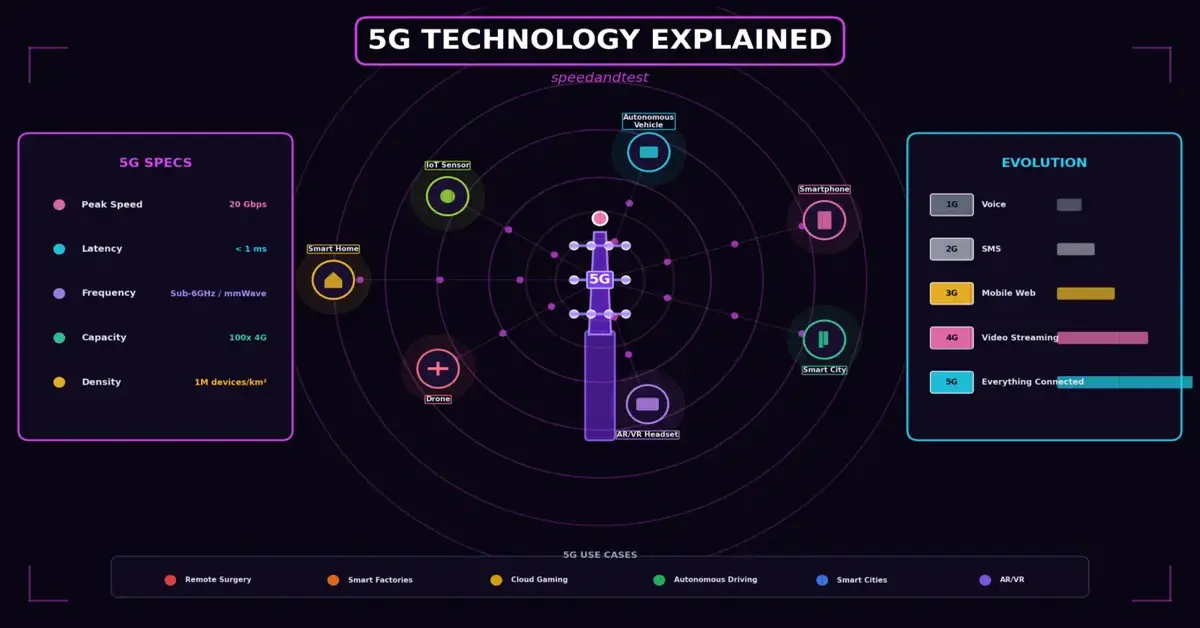
At its most basic, 5G is the fifth generation of cellular network technology, the same category of technology that lets your phone make calls, send texts, and access the internet without a Wi-Fi connection. Each new generation has historically brought faster speeds and new capabilities, and 5G continues that trend, but with a more significant leap forward than some previous generational upgrades, particularly in terms of latency and the ability to support many connected devices simultaneously.
How 5G Technology Explained Compares to 4G LTE
While 4G LTE was primarily designed to make mobile broadband internet fast and practical for everyday use, 5G was designed with a broader set of goals in mind from the start, including not just faster consumer internet but also supporting entirely new categories of applications like industrial automation, smart infrastructure, and ultra-responsive real-time services that 4G’s architecture was never intended to handle at scale.
The Three Types of 5G Technology Explained
Not all 5G is created equal, and understanding the different types helps explain why some people experience dramatic speed improvements while others notice more modest gains. Low-band 5G uses lower frequencies that travel long distances and penetrate buildings effectively, offering wide coverage but speeds only somewhat faster than good 4G. Mid-band 5G strikes a balance, offering meaningfully faster speeds with reasonably good coverage, and has become the backbone of most 5G networks. High-band, or millimeter wave, 5G delivers the dramatic multi-gigabit speeds seen in marketing materials but only over very short distances, typically limited to dense urban areas, stadiums, and similar high-traffic locations.
Why Latency Matters as Much as Speed
Marketing materials tend to emphasize download speed, but 5G’s reduction in latency, the delay before data starts moving, may prove even more significant for certain applications. Lower latency makes real-time interactions feel more immediate and responsive, which matters enormously for applications like cloud gaming, video calls, and any scenario where even a fraction of a second’s delay is noticeable or consequential.
What 5G Technology Explained Means for Everyday Phone Users
For most everyday smartphone users, 5G translates into faster app downloads, smoother video streaming even in crowded areas like stadiums or concerts where many people are using their phones simultaneously, and generally more responsive browsing. The improvement is often most noticeable in situations where 4G networks previously struggled, such as dense crowds or areas with historically weak coverage, rather than in simple everyday tasks that 4G already handled reasonably well for most users.
Beyond Smartphones: 5G Technology Explained’s Broader Applications
While consumer smartphones get most of the attention, 5G’s design specifically anticipated a much broader set of use cases. Its ability to support enormous numbers of simultaneous low-power device connections makes it well suited for the Internet of Things, enabling smart city infrastructure, industrial sensors, and connected vehicles to communicate reliably at a scale that would overwhelm earlier network generations. This capability is sometimes overlooked in consumer-focused discussions of 5G but represents a significant part of its long-term significance.
Common Misunderstandings About 5G Technology Explained
Several misconceptions about 5G persist despite years of deployment. Some assume 5G is universally available and universally fast, when in reality coverage and performance vary enormously by location and by which type of 5G frequency band is actually deployed in a given area. Others assume 5G will make wired home internet obsolete entirely, when in practice fixed wireless 5G serves as a valuable alternative primarily in areas lacking strong wired infrastructure, while fiber remains the superior option for households with access to it.
5G Technology Explained: Device Compatibility
To use 5G, you need a device with 5G-compatible hardware, something included in most smartphones released over the past several years but absent from older devices. It is also worth understanding that a 5G-compatible device does not guarantee 5G speeds everywhere; without adequate 5G coverage in your specific area, your device will simply fall back to 4G LTE, which remains a robust and widely available fallback network in most regions.
The Rollout Timeline and What to Expect
5G Technology Explained deployment has been, and continues to be, a gradual, multi-year process rather than an instant nationwide switch. Carriers prioritize high-demand urban areas first, given the infrastructure investment required, with coverage expanding to suburban and rural areas over time. Understanding this gradual rollout pattern helps set realistic expectations about when and where you might experience the fullest benefits of the technology in your specific location.
Related Reading on Next-Generation Connectivity
For a deeper dive into how 5G intersects with broader internet infrastructure and future connectivity trends, see our article on 5G technology and the future of internet connectivity, and for a wider view of where digital infrastructure is headed, see the future of internet technology.
The Technical Building Blocks Behind 5G Technology Explained
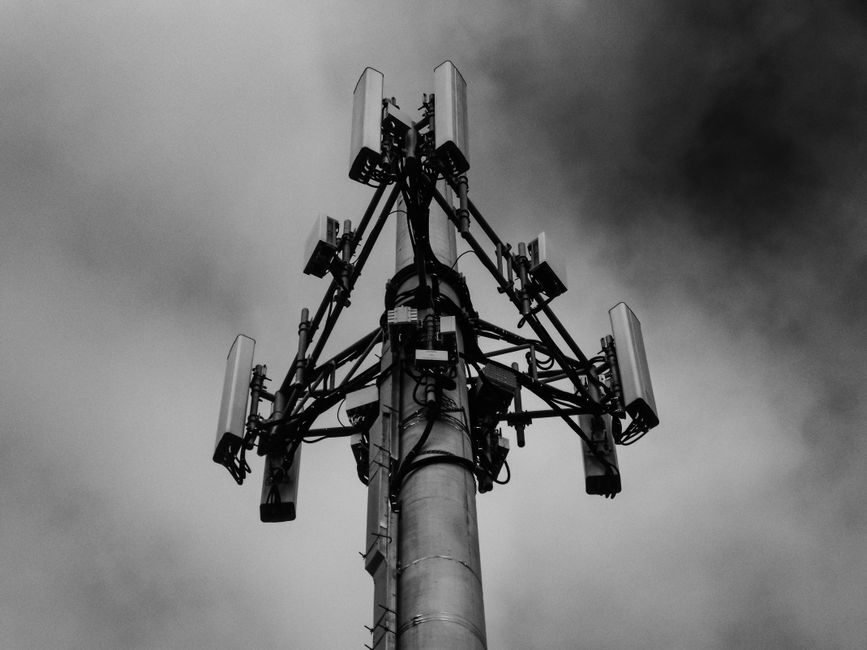
Understanding 5G technology at a slightly deeper level requires knowing a few key technical concepts that distinguish it from previous generations. Massive MIMO, short for multiple-input multiple-output, uses many more antennas at cell towers than previous generations, allowing the network to serve many more users simultaneously with less interference between their individual connections. Beamforming directs wireless signals more precisely toward specific devices rather than broadcasting indiscriminately in all directions, improving both signal strength and efficiency for the intended recipient while reducing interference for everyone else nearby.
Small cells represent another key building block, particularly for higher frequency 5G deployments. Unlike traditional cell towers that cover large areas from a single tall structure, small cells are compact, lower-power base stations placed more densely throughout an area, often mounted on utility poles or building exteriors. This denser network of smaller access points is what makes high-band millimeter wave 5G’s impressive speeds possible, though it also explains why building out comprehensive high-band coverage takes considerably more infrastructure investment and time than lower-band alternatives.
Real-World Speed Expectations by Band Type
Setting realistic expectations for 5G Technology Explained performance requires understanding what speeds are actually achievable with each frequency band type in typical, non-ideal conditions. Low-band 5G commonly delivers speeds in a similar range to strong 4G LTE, often improved by a modest but noticeable margin. Mid-band 5G, now the most widely deployed type in many markets, commonly delivers speeds several times faster than typical 4G under normal conditions. High-band millimeter wave 5G can achieve speeds rivaling or exceeding home fiber connections, but only within a limited radius of a small cell and typically only with a clear line of sight to that cell.
These real-world figures matter because marketing materials often highlight the theoretical maximum speeds achievable under laboratory conditions rather than what typical users experience day to day. Understanding which band type is actually serving your specific location, information often available through your carrier’s coverage map or network mode indicator, provides a much more accurate basis for setting performance expectations than headline marketing numbers alone.
The Path From 5G to Future Network Generations
Even as 5G networks continue to mature and expand, research into future network generations is already underway in research labs and international standards bodies. Understanding 5G’s own architecture and design philosophy, particularly its emphasis on flexibility and support for diverse use cases beyond simple consumer connectivity, provides useful context for anticipating how future generations might continue that trajectory rather than represent a completely different paradigm. For now, 5G remains very much the current frontier of practical, widely deployed mobile network technology, with years of continued rollout and refinement still ahead before its full potential is realized across all coverage areas.
5G Technology Explained’s Role in Emerging Technologies
Beyond faster phones, 5G Technology Explained is increasingly cited as a foundational enabler for a range of emerging technologies still gaining mainstream traction. Augmented and virtual reality applications benefit enormously from 5G’s reduced latency, since these experiences require near-instantaneous responsiveness to head and body movement to avoid discomfort or a broken sense of immersion. Remote-controlled machinery and telemedicine applications, where a delayed signal could have serious real-world consequences, similarly depend on the kind of consistent, low-latency connection that 5G Technology Explained is specifically designed to provide at scale, something earlier network generations were never architected to reliably deliver.
Frequently Asked Questions
Do I need to pay extra for 5G Technology Explained service?
This varies by carrier. Some include 5G access in all plans, while others reserve the fastest tiers of 5G for premium plans, so checking your specific carrier’s policy is worthwhile.
Can 5G Technology Explained networks handle sudden spikes in usage, like at a concert?
This is one of 5G’s key design strengths. Its capacity for handling many simultaneous connections makes it noticeably better than 4G at maintaining usable service in dense crowds where thousands of devices connect at once.
Why does my phone show 5G Technology Explained but feel no faster than 4G?
This often happens when you are connected to low-band 5G, which offers only modest speed improvements over strong 4G LTE, or when the local network is congested despite showing a 5G connection indicator.
Does 5G cost carriers a lot more to operate than 4G?
Yes, particularly for high-band deployments requiring dense small cell networks and extensive fiber backhaul, which is part of why 5G rollout has been gradual rather than an overnight nationwide switch.
Is 5G Technology Explained the same everywhere in the world?
No. Different countries and carriers have deployed different combinations of low-band, mid-band, and high-band 5G, and available frequency bands can vary based on national spectrum allocation policy.
Can I use 5G Technology Explained on an older 4G phone?
No. 5G requires specific hardware to receive and process the relevant radio frequencies, so older 4G-only devices will continue operating on 4G networks regardless of local 5G availability.
Does 5G Technology Explained work well indoors?
Low-band and mid-band 5G generally penetrate buildings reasonably well, similar to 4G. High-band millimeter wave 5G struggles significantly with indoor penetration due to its shorter wavelength and higher susceptibility to obstruction.
Will 5G Technology Explained replace my home Wi-Fi entirely?
Not typically. Most people still use 5G on mobile devices while relying on Wi-Fi at home, though 5G fixed wireless access is a growing alternative to traditional wired home internet in select areas.
Why do some carriers claim different 5G coverage than others in the same area?
Each carrier owns different spectrum licenses and has deployed infrastructure at its own pace, so actual coverage and performance can vary meaningfully between carriers even within the same city or neighborhood.
How much faster is high-band 5G compared to typical home internet?
Under ideal conditions, high-band 5G can rival or exceed many fiber connections, though its limited range and building penetration mean this peak performance is only available in specific, limited locations.
What is massive MIMO and why does it matter?
Massive MIMO uses many antennas at a cell site to serve more users simultaneously with less interference, directly contributing to 5G’s ability to handle dense crowds and high device counts better than earlier network generations.
How can I tell which type of 5G my phone is connected to?
Many phones display a network mode indicator distinguishing 5G types, and carrier coverage maps often specify which frequency bands are deployed in a given area, helping you understand realistic expected performance.
Does 5G Technology Explained improve battery life compared to 4G?
Not generally. Early 5G modems consumed more power than 4G equivalents, though efficiency has improved significantly with newer chipsets, narrowing but not fully eliminating the gap in typical usage scenarios.
Is 6G already being deployed anywhere?
No. 6G remains in the research and early standardization phase as of now, with commercial deployment expected later this decade at the earliest, well after 5G networks mature further.
5G represents a genuine technological advancement, though its real-world impact varies considerably depending on your location, device, and carrier. According to the GSMA’s 5G guide, understanding the specific frequency bands and deployment approach used in your area provides a much more accurate picture of what to expect than broad marketing claims alone.