ISP Selection Guide: Powerful Tips for the Best ISP
Table of Contents
Choosing an ISP Selection Guide internet service provider is one of those decisions that feels like it should be simple but often turns into a confusing comparison of overlapping plans, promotional pricing, and marketing claims that are difficult to verify in advance. This ISP Selection Guide walks through a practical, step-by-step approach to selecting an ISP Selection ISP Selection Guide, covering how to evaluate availability, technology type, pricing structure, and the less obvious factors that determine whether you will actually be satisfied with your choice a year down the road.
Step One: Determine What Is Actually Available at Your Address
Before comparing features or prices, the first and most important step is determining which providers actually offer service at your specific address, since availability varies enormously even between neighboring streets in some areas. Most providers offer an online address-lookup tool that instantly shows available plans, though it is worth calling directly in ambiguous cases, since online tools occasionally show outdated or overly optimistic availability information that does not reflect current infrastructure reality.
Understanding ISP Selection Guide Connection Technology Options
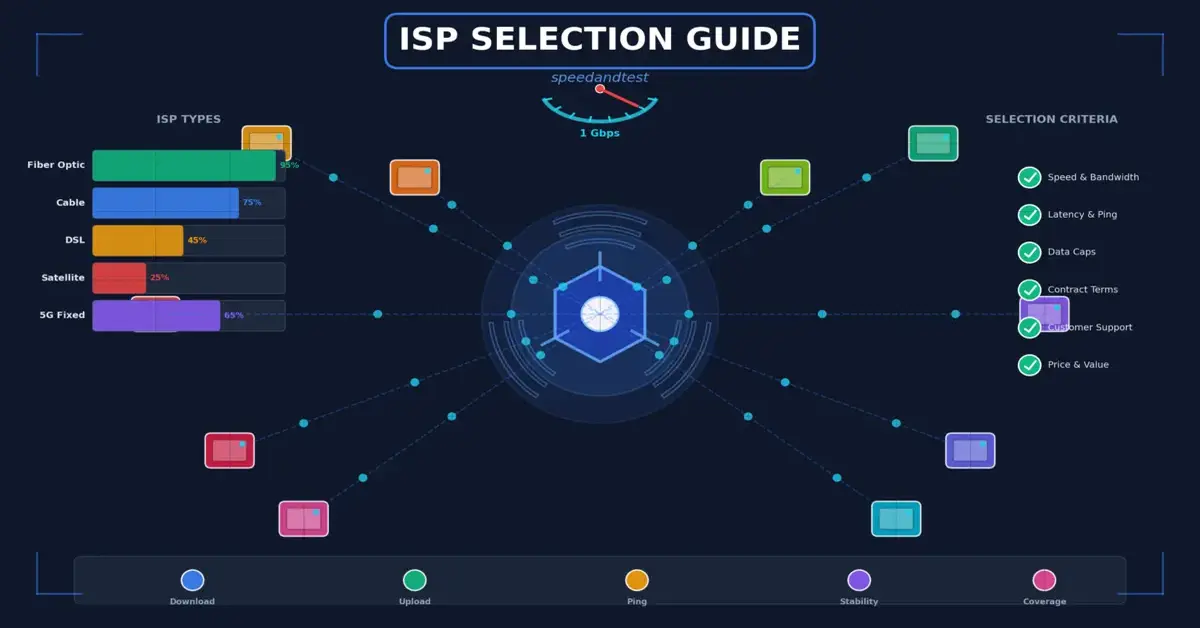
Once you know which providers serve your address, identify which connection technology each one offers, since this fundamentally shapes the ISP Selection Guide performance ceiling and reliability you can expect. Fiber generally provides the best overall performance and reliability, cable offers strong download speeds with more limited uploads, DSL provides modest but widely available service, and fixed wireless or satellite fill gaps in areas lacking wired infrastructure.

Step Two: Match Plan ISP Selection Guide Speed to Your Household’s Actual Needs
Rather than automatically choosing the ISP Selection Guide’s fastest available plan, take a realistic inventory of your household’s internet usage. Consider the number of people regularly online simultaneously, the types of activities they engage in, from basic browsing to 4K streaming or competitive gaming, and whether you work from home with demanding video conferencing needs. Overestimating your needs means paying for unused capacity, while underestimating leads to a frustrating, congested experience during peak usage.
- A single person doing light browsing and standard video streaming: 25 to 100 Mbps is typically sufficient
- A small household with moderate streaming and remote work: 100 to 300 Mbps offers comfortable headroom
- A larger household with multiple simultaneous 4K streams, gaming, and remote work: 300 Mbps to 1 Gbps
- Households with very heavy simultaneous usage or home businesses: symmetric gigabit or higher plans
Step Three: Scrutinize ISP Selection Guide Pricing Structure and Contract Terms
Advertised prices often represent promotional rates that increase substantially after an introductory period, sometimes doubling after twelve months. Carefully review the ISP Selection Guide standard rate you will pay after any promotional period ends, and factor this into your comparison rather than focusing solely on the attractive initial price. Additionally, check for data caps, equipment rental fees, installation charges, and early termination fees if you are considering a contract, since these can meaningfully affect the ISP Selection Guide true cost of a plan that looked cheapest at first glance.

Step Four: Research ISP Selection Guide Real-World Reliability and Customer Service
Marketing materials rarely mention outage frequency or customer service quality, making independent research essential. Online reviews, local community forums, and neighbors already using a specific provider can offer far more realistic insight than a provider’s own marketing materials. Pay particular attention to patterns in complaints, such as recurring outages, difficulty reaching support, or unexpected billing issues, since isolated negative reviews are less concerning than a consistent pattern across many different customers over time.
Step Five: Understand ISP Selection Guide Equipment Options
Most providers offer a choice between renting their equipment for a monthly fee or purchasing your own compatible modem and router. Renting typically includes free replacement if equipment fails and occasional automatic upgrades, while purchasing your own equipment usually pays for itself within a year or two through avoided rental fees, provided you are comfortable managing your own hardware and occasional troubleshooting without provider support.
Comparing ISP Selection Guide Providers Side by Side
Once you have gathered information on availability, technology, pricing, and reputation for each provider serving your address, create a straightforward comparison covering true long-term cost, connection technology, advertised versus realistic expected speeds, contract terms, and reliability reputation. This structured comparison makes it much easier to identify the genuinely best option for your specific situation rather than being swayed by whichever provider has the most prominent advertising or the flashiest introductory offer.
The Role of ISP Selection Guide Installation Experience
The installation process itself is often overlooked when comparing providers but can meaningfully affect your first impression and ongoing satisfaction. Ask about typical installation wait times, whether professional installation is included or optional, and what happens if the technician determines that additional work, such as running new cabling, is required beyond a standard setup. Providers with a reputation for punctual, professional installation tend to also perform better on ongoing service quality, since operational competence in one area often reflects broader organizational quality across the company.
Special Considerations for ISP Selection Guide Rural and Underserved Areas
Households in rural or underserved areas often face more limited choices, sometimes with only satellite or older DSL technology available. In these situations, it is worth researching government broadband expansion programs, cooperative or community-owned network initiatives, and newer fixed wireless options like 5G home internet, which have expanded meaningfully in recent years and may offer better performance than traditional rural options even where fiber remains unavailable.
After You Sign Up: What to Check
Once service is installed, promptly test your actual speeds via a wired connection and compare them against what was promised, ideally within the provider’s standard satisfaction guarantee window if one is offered. Address any significant shortfall immediately while you still have recourse, rather than waiting months and losing the ability to cancel without penalty if the service genuinely does not meet the promised specifications.
Related Reading on ISP Selection Guide Performance
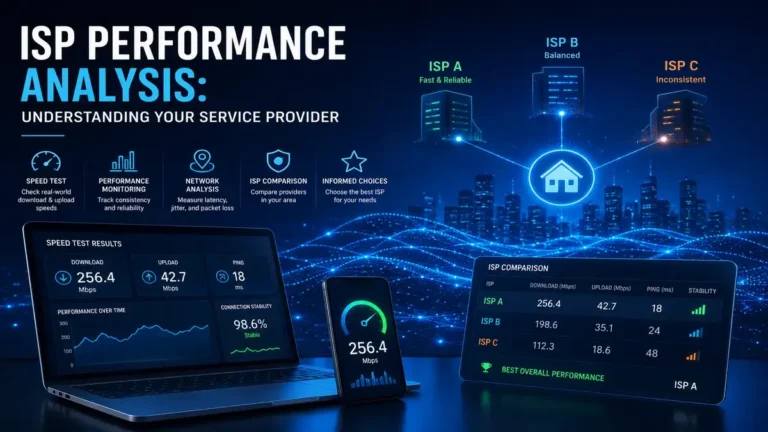
Once you have selected and set up service, understanding how to evaluate its ongoing performance becomes the next important step. See our ISP Selection Guide on ISP Selection Guide performance analysis for a deeper look at monitoring your chosen provider over time, and our internet performance ISP Selection Guide for maximizing what you get from your new connection.
Reading Between the Lines of Promotional Offers
Promotional offers are designed to look as attractive as possible on the surface, and learning to read past the headline number is a valuable skill when comparing providers. Watch for phrases like “for the first 12 months” or “with autopay and paperless billing discount,” both of which indicate the advertised price is conditional and may not reflect what you will actually pay. Similarly, bundled discounts that require signing up for television or phone service alongside internet can make a plan appear cheaper than a straightforward internet-only comparison would suggest, so always calculate the true internet-only cost when comparing across providers that structure their offers differently.
Gift cards and one-time sign-up bonuses, while a nice perk, should not weigh heavily in your decision compared to the ongoing monthly cost and service quality you will experience for years afterward. A modest one-time bonus rarely offsets a meaningfully higher standard rate or a demonstrably worse reliability track record over the life of your service.
The Importance of Reading the Actual Service Agreement
Beyond the marketing page, the formal service agreement or terms of service document contains the actual binding details of what you are agreeing to, including precise language around speed guarantees, or the notable absence of them, data cap enforcement, and the specific conditions under which the provider can change your rate. While reading a lengthy legal document is rarely anyone’s idea of an enjoyable afternoon, at minimum, searching for key terms like “cap,” “throttle,” and “guarantee” within the document can surface important details that sales representatives may not proactively mention during the sign-up process.
Weighing Provider Size and Local Presence
Large national providers typically offer more resources, more consistent standardized service, and broader availability, while smaller regional or local providers sometimes offer more personalized customer service and greater flexibility, particularly in areas where they compete directly against a larger incumbent. Neither category is universally better; a smaller local provider with strong community reputation can sometimes outperform a larger national brand on both service quality and value, particularly in markets where the larger provider treats the area as a lower investment priority compared to its core coverage regions.
Frequently Asked Questions
How do I find out which providers serve my exact address?
Most provider websites offer an address-lookup tool showing available plans instantly. For ambiguous cases, calling the provider directly or checking government broadband availability maps can provide more definitive information.
What if my only option is satellite internet?
Satellite remains a reasonable fallback where no other option exists, though it typically carries higher latency than wired or fixed wireless alternatives, making it less suitable for real-time applications like video calls or gaming despite adequate download speeds.
Is it worth paying more for a symmetric upload and download plan?
For households with significant video conferencing, cloud backup, or content creation needs, symmetric plans offer meaningful benefits. For typical browsing and streaming households, asymmetric plans are usually sufficient and more affordable.
Are online provider reviews trustworthy?
Reviews are useful in aggregate, but individual reviews can be biased or outdated. Looking for consistent patterns across many reviews and checking recent dates gives a more reliable picture than relying on any single review.
Should I choose the provider with the lowest price or the best reputation?
Reputation and reliability generally matter more for long-term satisfaction than a slightly lower price, since frequent outages or poor customer service create ongoing frustration that outweighs modest monthly savings.
Does professional installation quality really vary between providers?
Yes. Some providers consistently receive praise for punctual, professional installation, while others are frequently criticized for missed appointment windows, which can be a meaningful factor when comparing otherwise similar options.
How often should I re-evaluate my ISP Selection Guide choice?
Reviewing your options every one to two years, or whenever your promotional pricing period ends, ensures you are not overpaying and allows you to take advantage of new providers or technologies that may have become available in your area.
Does the number of providers in my area affect the prices I’m offered?
Yes, significantly. Areas with genuine competition between multiple providers tend to see better pricing and service quality, while areas served by only one or two providers often have less room for negotiation.
Can I negotiate pricing with a new provider before signing up?
Yes, in many cases. New customer promotions are often somewhat negotiable, and mentioning competing offers from other providers serving your address can sometimes result in better pricing or added perks.
What should I do if a provider’s advertised speed and my actual speed do not match?
Document your test results using a wired connection over several days, then contact customer support with this evidence. Many providers have satisfaction guarantees allowing cancellation without penalty if service consistently fails to meet promised specifications.
Do smaller local ISP Selection Guide offer worse service than large national providers?
Not necessarily. Smaller providers often compete on customer service and local responsiveness, and many maintain strong reputations that rival or exceed larger national competitors in their specific service areas.
Should I read the full terms of service before signing up?
At minimum, searching the document for terms like data caps, throttling, and speed guarantees can reveal important details that are not always emphasized during the sales process, helping you avoid unwelcome surprises later.
Are sign-up bonuses like gift cards worth prioritizing?
Generally not. A one-time bonus is far less significant over time than the ongoing monthly rate and service reliability, which affect your experience for years rather than just at sign-up.
What is a reasonable amount of time to wait before switching providers after a bad experience?
If issues persist despite troubleshooting and direct communication with support over several weeks, and no improvement is offered, it is reasonable to begin exploring alternative providers rather than waiting indefinitely for a resolution.
Selecting the right internet service provider involves more than comparing headline prices; it requires understanding your actual needs, researching real-world reliability, and reading the fine print on pricing and contract terms. According to Wikipedia’s overview of internet service providers, the industry’s structure and competitive dynamics vary considerably by region, making local research an essential part of any informed decision.