Network Protection: Powerful Tools to Secure Your Data
Table of Contents
Every device connected to a network, whether a home router, a business server, or a smartphone on public Wi-Fi, represents a potential entry point for someone attempting unauthorized access. Cybersecurity and network protection have moved from a specialized IT concern to an everyday necessity, as more of daily life, from banking to healthcare to workplace collaboration, depends on networks that must remain both accessible and secure. This guide walks through the fundamental principles of network protection, the most common threats facing households and businesses today, and practical steps anyone can take to build a more resilient network.
Understanding the Modern Threat Landscape
Network Protection threats have grown considerably more sophisticated over the past decade. Where early network attacks often relied on relatively simple techniques, today’s threats include automated bots that continuously scan the internet for vulnerable devices, ransomware that can encrypt an entire network’s data within minutes of gaining access, and increasingly convincing phishing attempts designed to trick even security-conscious users into granting access voluntarily. Understanding this evolving landscape is the first step toward building appropriate defenses.
Attackers are not always sophisticated nation-state actors targeting high-value systems; a significant portion of Network Protection attacks are opportunistic, automated attempts targeting any vulnerable device regardless of who owns it. This means that even small home networks and modest business systems face real, ongoing risk, not just large organizations with obviously valuable data.
Common Attack Vectors
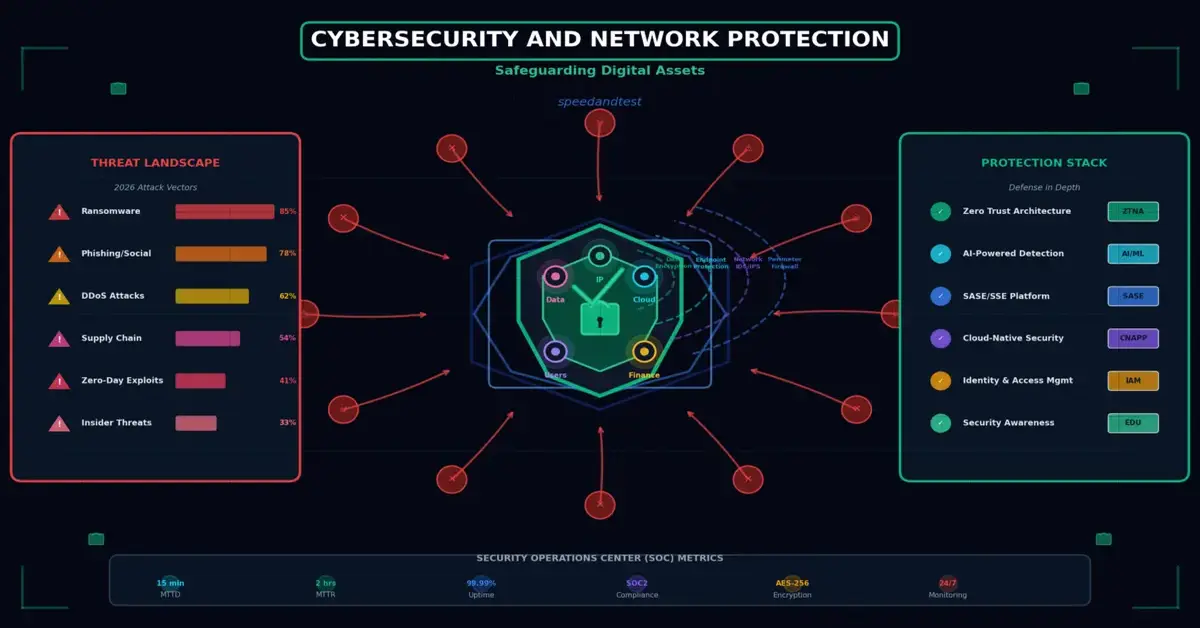
Attackers commonly gain Network Protection access through weak or reused passwords, unpatched software vulnerabilities, misconfigured devices left with default settings, and social engineering techniques that manipulate people into providing credentials or access directly. Understanding these common entry points helps prioritize which defensive measures will have the greatest practical impact.

The Foundation: Strong Passwords and Authentication
Despite years of security awareness campaigns, weak and reused passwords remain among the most common causes of Network Protection breaches. A strong password policy, combined with a password manager to make strong unique passwords practical to maintain across many accounts, dramatically reduces the risk of credential-based attacks. Multi-factor authentication, which requires a second verification step beyond a password, such as a code from a mobile app, adds a critical additional layer of protection that can stop an attacker even if they somehow obtain a valid password.
- Use a unique, complex password for every account and device, never reusing passwords across services
- Enable multi-factor authentication wherever it is available, particularly for email, banking, and administrative accounts
- Change default passwords on routers, cameras, and other network-connected devices immediately after setup
- Consider a reputable password manager to generate and securely store complex passwords
Securing Your Router: The Network Protection’s Front Door
Your router serves as the gateway between your internal network and the broader internet, making its security configuration particularly important. Many routers ship with default administrative credentials that are publicly documented, making them an easy target if left unchanged. Keeping router firmware updated, disabling remote administration unless specifically needed, and using strong encryption for Wi-Fi, currently WPA3 where supported, are foundational steps that many households and small businesses overlook.
Segmenting Your Network Protection
Network segmentation, which involves separating different types of devices onto distinct network segments, limits the damage a single compromised device can cause. Many modern routers support a guest network feature that isolates visitor devices from your primary network, and the same principle can be extended to isolate smart home devices, which often have weaker security than computers and phones, from more sensitive systems on the same network.

Firewalls and Intrusion Detection
A firewall monitors and controls incoming and outgoing network traffic based on predetermined security rules, acting as a barrier between trusted internal networks and untrusted external networks like the broader internet. Most modern routers include a basic firewall, but businesses with more significant security requirements often deploy dedicated firewall appliances with more sophisticated capabilities, including intrusion detection and prevention systems that actively monitor for and block suspicious traffic patterns in real time.
Keeping Software and Firmware Updated
Software vulnerabilities are discovered continuously, and vendors regularly release patches to address them. Failing to apply these updates promptly leaves known, often publicly documented vulnerabilities open for attackers to exploit. This applies not just to computers and phones but to routers, smart home devices, and any other network-connected hardware, all of which should be updated as soon as security patches become available, ideally through automatic update settings where offered.
Recognizing and Avoiding Phishing Attempts
Phishing remains one of the most effective attack techniques precisely because it targets human judgment rather than technical vulnerabilities. Modern phishing attempts have become increasingly sophisticated, often closely mimicking legitimate communications from trusted organizations. Training yourself and, in a business context, your entire team to recognize warning signs, such as urgent language, unexpected attachments, and slightly altered sender addresses, meaningfully reduces the risk of a successful phishing attack compromising network security.
Network Protection for Remote and Hybrid Work
The rise of remote and hybrid work has expanded the traditional network perimeter well beyond a single office building, introducing new security considerations. Virtual private networks (VPNs) encrypt traffic between a remote worker’s device and the corporate network, protecting data from interception on potentially insecure networks like public Wi-Fi. Organizations increasingly adopt a zero-trust security model, which assumes no device or user should be automatically trusted regardless of location, requiring verification for every access request rather than granting broad access simply because a device is connected to the internal network.
Building an Incident Response Plan
Even well-defended networks can experience a security incident, and having a clear response plan in place before an incident occurs significantly reduces the damage it causes. A basic incident response plan should identify who to contact, how to isolate affected systems to prevent further spread, how to preserve evidence for investigation, and how to communicate with affected users or customers if data was compromised. Organizations that practice their response plan periodically tend to respond far more effectively when a real incident occurs compared to those improvising for the first time under pressure.
How Network Protection Connects to Broader Internet Safety
Network protection at the infrastructure level works best alongside good personal security habits across all the devices and services connecting to that network. For a broader look at protecting yourself online beyond network-level defenses, see our guide on cybersecurity and internet safety, and for foundational networking concepts that underpin these security practices, see our article on hardware and connectivity.
Encryption: Protecting Data in Transit and at Rest
Encryption transforms readable data into a coded format that can only be decoded with the correct key, protecting information both as it travels across a network and while it sits stored on a device or server. Modern web traffic is typically encrypted using protocols like TLS, visible to users as the padlock icon in a browser’s address bar, which protects sensitive information such as passwords and payment details from interception as they cross the network. Encrypting stored data adds a further layer of protection, ensuring that even if a storage device is physically stolen or a server is breached, the underlying data remains unreadable without the appropriate decryption key.
Businesses handling sensitive customer data should evaluate encryption practices across their entire data lifecycle, not just during transmission, since data at rest on backup systems, employee laptops, and cloud storage represents an equally important attack surface that is sometimes overlooked in favor of more visible network-perimeter defenses.
Monitoring and Logging Network Activity
You cannot defend against threats you cannot see. Network monitoring tools that log traffic patterns, failed login attempts, and unusual data transfers provide visibility that is essential both for detecting active attacks and for investigating incidents after the fact. Even a modest logging setup, reviewed periodically, can reveal patterns such as repeated failed login attempts from an unfamiliar location that might otherwise go unnoticed until they escalate into a more serious breach.
For businesses, centralized log management and, where budget allows, dedicated security monitoring services provide a much more comprehensive view than manually reviewing individual device logs, and can often detect sophisticated attack patterns that would be nearly impossible to spot through casual observation alone.
The Human Element in Network Security
Technology alone cannot fully secure a network; the people using it play an equally critical role. Regular security awareness training, clear policies around acceptable device use and data handling, and a workplace culture that encourages reporting suspicious activity without fear of blame all contribute meaningfully to overall network security. Organizations that treat security training as a one-time onboarding exercise rather than an ongoing practice tend to see awareness fade over time, precisely as new threats and tactics continue to emerge.
Physical Security and Network Protection
Network protection is not purely a digital concern; physical access to network hardware can bypass many software-based defenses entirely. Securing network closets, restricting physical access to servers and core networking equipment, and being mindful of who can physically connect a device to a network port are often overlooked aspects of a comprehensive security strategy, particularly in shared office spaces or facilities with regular visitor traffic.
Frequently Asked Questions
How often should I update my router’s firmware?
Check for firmware updates at least every few months, and enable automatic updates if your router supports them, since manufacturers regularly patch newly discovered vulnerabilities.
What is the single most impactful step for improving network security?
Enabling multi-factor authentication across all important accounts is widely considered one of the highest-impact, lowest-effort steps available, since it stops most credential-based attacks even when a password is compromised.
Is a home network really a target for attackers?
Yes. Automated scanning tools continuously probe the internet for vulnerable devices regardless of whether they belong to a large corporation or a private residence, making basic network hygiene important for everyone.
Can a firewall alone fully protect my network?
No single tool provides complete protection. A firewall is an important layer, but effective network protection combines firewalls with updated software, strong authentication, monitoring, and user awareness working together.
What is the difference between a VPN and a firewall?
A firewall controls what traffic is allowed to enter or leave a network, while a VPN encrypts traffic traveling between two points, typically protecting data as it crosses an untrusted network like the public internet.
How do I know if my smart home devices are secure?
Change default passwords immediately, keep device firmware updated, and consider placing smart home devices on a separate network segment or guest network isolated from computers containing sensitive information.
What should I do if I suspect my network has been compromised?
Disconnect affected devices from the network, change all passwords from a separate, trusted device, and if the situation is serious, consult a cybersecurity professional to help identify and remediate the extent of the compromise.
Are free antivirus programs sufficient for network protection?
Free antivirus can provide a baseline of protection, but comprehensive network protection typically requires additional layers, including a properly configured firewall, regular updates, and good password practices, working together.
What is a zero-trust security model?
Zero trust assumes no device or user should be automatically trusted, even if already inside the network perimeter, requiring continuous verification for access to resources rather than granting broad trust based on network location alone.
How important is employee training in preventing breaches?
Very important. A large share of successful breaches involve some element of human error or manipulation, making regular, practical security training one of the most cost-effective defenses an organization can implement.
Should small businesses hire dedicated security staff?
Not always necessary for very small organizations, but even small businesses benefit from designating someone responsible for security oversight, or engaging a managed security service provider for ongoing monitoring and guidance.
Network protection is not a single product or setting but an ongoing combination of good habits, properly configured hardware, and awareness of evolving threats. By addressing password security, router configuration, software updates, and human factors like phishing awareness together, individuals and organizations can substantially reduce their risk of a costly security incident. The Cybersecurity and Infrastructure Security Agency’s best practices guide offers additional detailed recommendations for building a resilient security posture appropriate to your specific needs.